Baybayin mobile translation app coming soon

I’m almost done with v1.0 of my Baybayin mobile translation app. It will 1st be release for iOS (iPhone, iPod Touch, iPad) and Android following shortly. The initial version will be similar to my v2.0 Baybayin web translator. Got any suggested features? Tell me your ideas!

Sign up for the announcement list on BaybayinApp.com to get notified once available

Philippine Congress: Baybayin Bill Speech

TILAMSIK NG LIWANAG: ANG BAYBAYIN
Privilege Speech
HON. LEOPOLDO N. BATAOIL
June 6, 2011

Mr. Speaker, distinguished colleagues, friends, ladies and gentlemen, a blessed afternoon to all of you.

I rise today on a personal and collective privilege. Mr. Speaker, June 19, 2011 marks the year-long celebration of Dr. Jose Rizal’s 150th birth anniversary. This year’s celebration, organized by the national historical commission, has the theme “RIZAL: HALIGI NG BAYAN,” and will feature the life and works of the Philippine national hero.

In his book DOUBLE LIVES, author DAVID HEENAN said:

JOSE RIZAL, a contemporary of GANDHI and SUN YAT-SEN, is recognized as the greatest Filipino who ever lived. Having traveled extensively in Europe, America, and Asia, Rizal MASTERED 22 LANGUAGES, including Spanish, English, German, French, Chinese, Japanese, Hebrew, Greek, and various local dialects.

Mr. Speaker, “THE GOAL OF THIS CELEBRATION IS TO PROMOTE THE PHILIPPINE HERITAGE AND TO PROTECT IT.”

According to REGALADO TROTA JOSÉ, the new head of National Commission for Culture and the Arts’ (NCCA) Subcommission on Cultural Heritage, and archivist of the University of Santo Tomas Archives, heritage has two aspects: THE TANGIBLE HERITAGE, which are the buildings, the costumes, the artifacts; and THE INTANGIBLE HERITAGE — the dances, the languages and the gestures.

Mr. Speaker, isang karanasan ang nagbukas sa aking kamalayan na tayo pala ay may sariling Salitang Panulat bago pa man dumating ang mga banyagang mananakop. Nakausap ko ang isang kaibigan na galing sa Amerika at naibahagi niya sa akin na nagturo siya roon ng Baybayin sa paanyaya ng isang Pilipinong bihasa sa Filipino Martial Arts. Ang mga tinuruan niya roon ng Baybayin ay mga Amerikano. Dito nagsimula ang aking kaalaman patungkol sa Baybayin, na sa pagkakaalam ko at ng karamihan sa atin ito ay tinatawag na Alibata. Sa aming pag-uusap, Nakita at nadama ko sa kanya ang kakaibang pagmamahal at pagpapahalaga niya sa ating sariling salitang panulat. Ito ay tila isang tilamsik ng liwanag sa akin. Kaya naman, ako ay nahamon sa kanyang marubdob na pagnanais na buhayin ang napabayaan nating salitang panulat – ang Baybayin.

WHAT IS BAYBAYIN?

BAYBAYIN is the ancient syllabary script of the early Filipinos, which means “TO SPELL.” Spanish priest PEDRO CHIRINO in 1604 and ANTONIO DE MORGA 1609 wrote about Baybayin as being widely known by the country’s population. This supports the claim of Prof. F. LANDA JOCANO that Filipino ancestors have already established life ways prior to the coming of Western colonization.

JOSE RIZAL, our national hero himself was a skillful writer of the ancient syllabic Pilipino script called BAYBAYIN. He has written manuscripts in Tagalog that contain BAYBAYIN. He also used the BAYBAYIN script in his book, NOLI ME TANGERE, while portions of EL FILIBUSTERISMO was written in pieces of Bamboo called bumbong by Rizal himself in Baybayin now contained in Le Museé du Quia Branly, Paris, France.

He proudly declared in “SUCESOS DE LAS ISLAS FILIPINAS” circa 1609 that the “Philippines had an established barangay government system, a flourishing interisland and regional barter trade and a writing system well known and practiced in the land, contrary to the vulgar name ‘Indios’ that the Spanish friars and conquestadors had called our people then”.

Before the Spanish conquest, the Filipino men and women were known for their advanced knowledge and skill in our indigenous written language, the “BAYBAYIN”. It was a sophisticated written language that was used to conduct commerce and trade with Malaysia, Indonesia, and even in the in Middle Eastern countries. Our ancestors were proud of their race, have a cultural and national identity that were at par with other advanced countries.

Furthermore, Mr. Speaker, even DON PEDRO PATERNO and DON TRINIDAD PARDO DE TAVERA wrote two (2) volumes of dictionary (circa 1884-1887) now found at the National Library detailing the script, strokes and pervasive use of Baybayin in the Philippines prior to the introduction of the Latin-Roman scripts that we are using popularly today. The Baybayin scripts were culled from our giant shells, the Taklobo, in which our forefathers gathered giant pearls, that is the very reason why we were called the “PEARL OF THE ORIENT”.

IMPORTANCE OF CULTURE & NEED TO PROMOTE BAYBAYIN

According to GRAEME SHANKLAND a leading British architect:

“A country without a past has the emptiness of a barren continent;

and a city without old buildings is like a man without a memory.”

“Ang isang bansang walang kasaysayan ay tulad ng tigang na sanlupain…

at isang nilalang na walang kamalayan.”

Mr. Speaker, ang wika ay may dalawang aspeto: ang WIKANG PASALITA at WIKANG PANULAT. Sa kasalukuyan mayroon lamang tayong wikang Pasalita samantalang ang ating Wikang Panulat ay halos naibaon na sa limot at itinuturing na “ENDANGERED ALPHABET”.

In one of Jose Rizal’s writings, “TO MY FELLOW CHILDREN” (1869) he said:

“This language of ours is like the rest, it once had a syllabic form and its own letters that vanished as though whirlwind had set upon a boat on a lake a long gone”.

Mr. Speaker, sa isang panayam kay TIM BROOK, isang manunulat at direktor ng “Writing Program” sa Shanghai College, patungkol sa “ENDANGERED ALPHABET PROJECTS”, ito ang kanyang sinabi (translated into Filipino):

“Ang pag-aaral at pagsusuring ito na ginanap sa Pilipinas ay naglalahad na matibay ang ebidensya na ang panulat na ito ay masasabing naglaho na dahil sa hindi na ito ginagamit. Ito ang tinatawag na Baybayin. Ito ang ginamit na panulat ng mga katutubo bago pa man dumating sa Pilipinas ang mga Kastila. Normal lamang na ipatupad ng mga mananakop ang pag-aaral, pagsasalita at pagsulat ng dala nilang alpabeto kung kaya’t ito ang naging dahilan kung bakit unti-unting nawala ang paggamit ng Baybayin.

Sa mga sumunod na mahigit sa dalawandaang taon pa ay naglaho ang Baybayin. Pumalit dito ang Alpabetong Latino. Sa ngayon, ang mga kabataan sa Aparri ay nakikiuso sa paglalagay ng mga tattoo na nasusulat sa Baybayin. At doon makakukuha ka ng mga T-shirts na may mga disenyong Baybayin. May mga biro pa roon na wala raw ni isang nakaaalam doon kung ano ang letrang nakatatak sa T-shirts at kung paano ito bibigkasin. Mga larawan lamang daw ito. Ito’y isang pambihirang pagkakataon na makikita ang kahalagahan at kaugnayan ng panulat sa kahulugan nito. Nakalulungkot isipin na ang naiwan na lamang ay ang mga disenyo ng panulat.

At isa pang bagay , ako’y nalungkot sapagkat ang kakaibang panulat na ito ay unti-unti nang naglaho. Sa tuwi-tuwina sa aking pagmamasid, ang panulat na ito ay hindi na ginagamit o itinuturo sa mga paaralan o ginagamit man lamang sa mga panulat sa pamahalaan sapagkat ang ginagamit na ngayon ay ang Alpabetong Arabo o ang tinatawag na Alpabetong Latino. Ang ating alam at ang ginagamit nating Alpabeto- kakaiba, maganda at natatanging panulat na ito sa buong mundo ay unti-unti nang naglaho. Gumawa ako ng mga pagsusuri na magpapatotoo nito”.

Ironically, Mr. Speaker, foreigners lately have become interested in teaching our Baybayin script abroad with Filipino crowd. If they are passionately interested with Baybayin, how much more should we, as Filipinos, revive or restore our endangered national treasure, the Baybayin script?

Japan has its own scripts, Kanji and Hiragana; China has the Han character. The Koreans, their Hangul. Almost all Asian nations have their own writing system. They use it in their street signs, food labels, books, et cetera. In simple terms, their written language is being used in their daily affairs. The Philippines, being an Asian country, has its own script too, the Baybayin, but it’s been long forgotten.

Gaya nga nang sinabi ni DR. JOSE RIZAL:

Ang salita nati’y tulad din sa iba na may alfabeto at sariling letra,

na kaya nawala’y dinatnan ng sigwa. Ang lunday sa lawa noongdakong ununa.”

Mr. Speaker, because of the aforementioned reasons, SA AKING MGA KABATA, (1869) DR. JOSE RIZAL

In line with this, I filed House Bill No. 4395 entitled: AN ACT PROVIDING FOR THE PROTECTION AND CONSERVATION OF BAYBAYIN, AND DECLARING BAYBAYIN AS THE NATIONAL SCRIPT OF THE PHILIPPINES.

The importance of writing in general and of the alphabet in particular for the preservation and progress of civilization is incalculable.

As University of Chicago scholar I. J. GELB has declared:

“WRITING IS SO IMPORTANT IN OUR DAILY LIFE THAT I SHOULD BE WILLING TO SAY THAT OUR CIVILIZATION COULD EXIST MORE EASILY WITHOUT MONEY, METALS, RADIOS, STEAM ENGINES, OR ELECTRICITY THAN WITHOUT WRITING.”

Before the invention of writing, the preservation of history, literature, and tradition was dependent upon fallible oral transmission and faulty human memory. It is no wonder that the seven ancient peoples (SUMERIANS, EGYPTIANS, ELAMITES, INDIANS, CRETANS, HITTITES, and CHINESE) who devised the earliest forms of true writing considered the art of writing to be a gift or invention of God or the gods.

(GEORGE THOMPSON & JERRY COMBEE, World History and Culture in Christian Perspective (2nd Edition) – A Beka Book)

Mr. Speaker, because of the aforementioned reasons, House Bill No. 4395 AN ACT PROVIDING FOR THE PROTECTION AND CONSERVATION OF BAYBAYIN, AND DECLARING BAYBAYIN AS THE NATIONAL SCRIPT OF THE PHILIPPINES, envisions to protect and preserve Baybayin as part of our cultural heritage and treasures which will serve as our national identity and tool for unification as a people.

Also, it will help inculcate patriotism among our citizenry especially among our youth if Baybayin will become our National Script and will be included in our Basic Education Curriculum.

“EDUCATION IS THE PROCESS OF TRANSMITTING THE CULTURAL HERITAGE OF A PEOPLE FROM ONE GENERATION TO THE NEXT. People of all cultures educate their children informally in the home and the community, and many cultures also educate children formally in a classroom setting, where they are taught literacy (reading and writing), mathematics, and other formal subjects. The Sumerians were the first to develop a system of formal schooling.

LANGUAGE AND WRITING THROUGH THE AGES by GEORGE THOMPSON & JERRY COMBEE, World History and Culture in Christian Perspective (2nd Edition) – A Beka Book

Mr. Speaker, A new wave of nationalism must rise for the development of our nation. It is time that we reclaim a national heritage that is threatened by globalization, and the rapidly changing times. It is time that we establish our national identity. The declaration of Baybayin as our national script would be a unifying element for us Filipinos. We owe it to our children and the generations to come to establish an identity uniquely Filipino.

So, Mr. Speaker, I urge this Congress to expedite the passage of House Bill No. 4395,

AN ACT PROVIDING FOR THE PROTECTION AND CONSERVATION OF BAYBAYIN, AND DECLARING BAYBAYIN AS THE NATIONAL SCRIPT OF THE PHILIPPINES and declare Baybayin as the National Script of the Philippines.

Related to this, I strongly request the government agencies concerned to immediately issue the Implementing Rules and Regulations of RA 10066, the 2010 Heritage Law. Section 38 & 39 of the said law It specifically states:

SECTION 38. INCORPORATION OF NATIONAL CULTURAL TREASURES AND IMPORTANT CULTURAL PROPERTY IN THE BASIC EDUCATION SYSTEM. – Within one (1) year from the effectivity of this Act, the Department of Education in coordination with the Commission’s Philippine Cultural Education Program shall formulate the cultural heritage education programs both for local and overseas Filipinos to be incorporated into the formal, alternative and informal education, with emphasis on the protection, conservation and preservation of cultural heritage property; and

SECTION 39. CULTURAL HERITAGE EDUCATION PROGRAM. – Within one (1) year from the effectivity of this Act, the Department of Education, the Technical Education and Skills Development Authority and the Commission on higher Education in consultation with the Commission shall set forth in its teaching programs nationwide the following cultural heritage education programs with emphasis at the provincial, city and municipal levels:

(a) Protection, conservation and preservation of cultural heritage properties;

(b) Instructional materials in prints, film and broadcast media on the cultural and historical significance of cultural properties; and

Mr. Speaker, To borrow the words of DR. JOSE RIZAL:

“If (this) succeeds to awaken your consciousness of our past, already effaced from

your memory…then I have not worked in vain, and with this as a basis,

however small it may be, we shall be able to study the future.”

Bilang pagtatapos, Mr. Speaker,

Ating Isigaw na!

Ating Isabuhay na!

Ating Isagawa na!

BAYBAYIN BUHAYIN!

Maraming Salamat po!

WIP Caps x Christian Cabuay

WIP Caps x Christian Cabuay

I’m proud to show you a sneak peak of my collaboration with the premier Philippine hat company, WIP Caps. For those that don’t know, I’m a hat freak and have over 20 fitteds in my collection.

The hat comes in clean white with my Ka logo. The sword represents the struggle and the pen represents art. It will be available in specialty retailers the Philippines and US around July. I’ll also have limited edition edition AP (Artist Proof) that will be individually numbered and hand embellished.

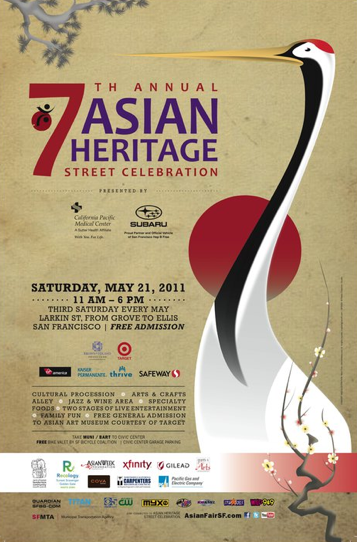
EVENT: Asian Heritage Street Celebration


I’ll be at the Asian Heritage Street Celebration this Saturday 5/21 with Ray of Malaya Designs showing some artwork, translations, and eating some good food. Drop by the booth and say hi. Look for the Katipunan flags. FREE event

The 7th Annual Asian Heritage Street Celebration will take place on Larkin Street, from Grove Street to Ellis Streets. Landmarks include City Hall, the Asian Art Museum, and the lion pylons setting off Little Saigon at Larkin and Eddy. Fair-goers are encouraged to walk, bicycle or take public transportation.

Bayani Mendoza de Leon interview

Baybayin.com - Bayani Mendoza de Leon

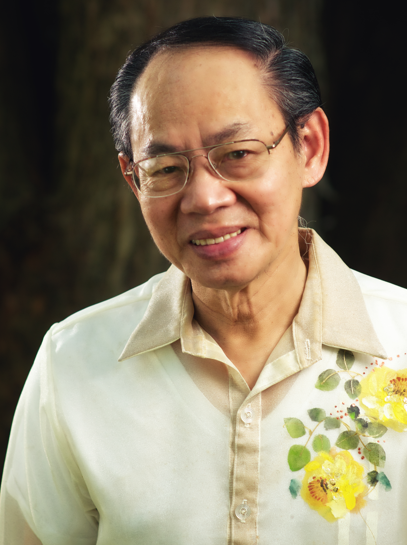
Bayani Mendoza de Leon, the author of “Baybayin, the Ancient Script of the Philippines: A Concise Manual.”

Christian Cabuay
When did you first learn Baybayin?

Bayani Mendoza de Leon
During my high school days, as I was reading what purportedly were copies of the original manuscripts of a few poems written by the Philippine national hero, Dr. Jose P. Rizal, I would notice some characters inscribed below each of the poem, and I couldn’t figure them out at the time. It turned out, after asking around, that those characters spelled out Rizal’s name in the Baybayin script. That experience started my fascination with this wonderful writing system.

Christian Cabuay
What types of materials were available when you went to high school? Were there dedicated textbooks for Baybayin or were they just a few pages in history books with reproductions from late 1800’s to 1930’s?

Bayani Mendoza de Leon
At the heels of my new found passion for learning more about Baybayin, I went to my Dad who I knew was an avid exponent of the Philippine cultural heritage and asked him for materials on Baybayin. He pulled out a book from his Filipiniana collection entitled “Salitikan ng Wikang Pambansa” printed in 1940 and written by Aurelio Alvero, a fierce nationalist scholar who published many subversive articles using the pseudonym Magtanggol Asa during the Japanese occupation of the Philippines (he was later executed by the Japanese). This book was actually a manual on the Baybayin—very well presented and gave me a good handle on the different characters of the script and how they are used.
It was also during my high school days that my Dad started taking me along with him to the house of the Philippine national artist in sculpture, Guillermo Tolentino. Mang Emong, as I called him, was not only an accomplished sculptor but also the president of the Union Espiritista Cristiana de Filipinos at the time. This is a society of spiritual healers, mediums, and believers in other-wordly realities. Mang Emong was well versed in Baybayin and in fact produced several texts on this writing system, including “Baybayin, a Syllabary” and “Bathala and Our Baybayin,” both appearing in 1972. He was the one who initiated me into the spiritual aspects of Baybayin. I remember him saying that the script being predominantly rooted in the vowel “a” points to its soul-infused attribute because “a” is the vowel that resonates with the energy of the heart.

Christian Cabuay
When did the idea of the book come about?

Bayani Mendoza de Leon
I didn’t plan on publishing a Baybayin manual. The idea for this manual was an offshoot of a course on Baybayin that I taught in 1979 in San Diego where I stayed initially as a Fulbright scholar completing my Master of Arts degree in music composition at the University of La Jolla. The course was under the auspices of the Pilipino Cultural Resource Center of San Diego of which I was the main consultant. I had accumulated a lot of materials for this course, and these all ended up in the book that I eventually published.

Christian Cabuay
What was the reaction when you 1st taught the script in 1979? What kind of materials did you have? There are still not that many materials out there besides what’s on the internet.

Bayani Mendoza de Leon
As I stated in my responses to your earlier questions, I was already steeped in the essence and mechanics of Baybayin back in my high school days. I should also mention that since those days my research and studies on the script had not abated, scouring libraries and museums for any extant documents on the subject.
At the Philippine National Library, I found a rich trove of Baybayin materials, to name a few, “Los Itas—with samples of Ancient Filipino writings,” 1890, by D.P. Paterno; “Los Antiguos Alfabetos de Filipinas,” 1862, by Emilio Wenceslao and Gamboa Retana; “La Antigua Escretura Filipina,” 1922, by Ignacio Villamor; “Doctrina Cristiana,” 1593, by S. Gabriel; “Ensayo de Gramatica Hispano-Tagala,” 1878, by Toribio Minguella; and many others. My own uncle, Ricardo Mendoza, published in 1972 a book entitled “Pinadaling Pag-aaral ng Katutubong Abakadang Pilipino,” where he argued passionately for incorporation into the Philippine schools’ curriculum of a course on the ancient script. It was in this book that ideas for expanding the Baybayin characters to allow for other orthographic systems were first laid down. I would later seize on this and take it much farther.

Christian Cabuay
Was Baybayin ever considered artwork before or is it just recently?

Bayani Mendoza de Leon
In a strict sense, the Baybayin characters as materials for artwork did not jell in the consciousness of Filipino artists until around 20 years ago, and largely involving the younger generation. There were sporadic expressions of interest in the Baybayin as an art source at an earlier period but only confined to the literal use of its characters, not as motifs for creative designs.
Examples are the university seal of the Far Eastern University of Manila where the fonts used were patterned after the Baybayin script, the logo of the Cultural Center of the Philippines designed by national artist for visual arts, Carlos “Botong” Francisco, that incorporated three representations of the Baybayin character “Ka” to stand for Katotohanan (Truth), Kagandahan (Beauty), and Kabutihan (Goodness); and the sash in the academic regalia of the University of the Philippines joined in front by an ornament and embroidered with the university’s initials in Baybayin.
In a larger sense, however, the ornate properties of the Baybayin script have always been part and parcel of Filipino aesthetics. Their curvilinear, arabesque patterns evolve from the spirit of Okir (root word of the Tagalog word for carving, ukit) that permeates Philippine architecture, crafts, implements, costumes, and other aspects of the national life. Okir is also said to signify the hidden force that shapes events and brings people’s lives together. Viewed through this lens, Baybayin can be said to have been intertwined closely with Philippine art throughout the people’s history.

Christian Cabuay
How involved are you with Baybayin now? Do you still write and/or teach it?

Bayani Mendoza de Leon
Up until 1999, I’ve been actively teaching courses and conducting workshops on Baybayin under the auspices of various organizations such as the Paaralang Pilipino Foundation, the Alay Performing Arts, Amauan Workshop, and U.P. Alumni and Friends. From these courses and workshops, I’ve accumulated a great deal of additional materials on how best the knowledge and practice of the script can be transmitted. I’ve also acquired more research that I believe will come in handy when I work on the second edition of my Baybayin manual.

Christian Cabuay
When will your 2nd edition of the book come out?

Bayani Mendoza de Leon
I plan to work on it this summer, so it should be ready for release probably by September or October at the latest.

Christian Cabuay
With more and more people using technology to learn, are you planning to distribute your materials via the internet or social media?

Bayani Mendoza de Leon
I think both digital and print distribution of my work will be the way to go these days.

Christian Cabuay
What’s your opinion on the proposed National Script Act of 2011, where Baybayin would become “official”? Do you think it’s premature since it’s not even standardized?

Bayani Mendoza de Leon
This is a really important step towards instilling the Baybayin script into the consciousness of the Filipinos, especially the youth. In the foreword of my Baybayin manual, I made this statement: “There was nothing in the national condition to support the script’s continued existence. The people had for so long lived on borrowed identities—borrowed thoughts, values, sentiments, and aspirations—that being their authentic selves, like practicing a native system of writing, had lost its relevance.”

The resurgence of appreciation for the indigenous and folk heritage of the Philippines actually happened in the 1970s but has only started maturing in the last 10 years. I believe the national condition needed for championing the revival of Baybayin has arrived, but the effort should be taken slowly. It should be aimed to coalesce around targeted key groups that will have strong influence on its successful adoption and implementation.

I don’t think there should be a rush to “inscribe Baybayin in all products locally produced or processed in the Philippines, and to include Baybayin translations on the labels of processed or food products.” The place to start is in the curriculum of elementary and secondary education. We don’t have to worry about there being no standard Baybayin version. We can start with any version and incorporate modifications as needed later in the process. This is how it was done during the selection process conducted by the National Language Institute of the Philippines for the regional dialect that would become the basis of the Philippine national language. Tagalog was the one chosen and into which words from other dialects have since been incorporated from time to time.

Christian Cabuay
What’s the 1st thing someone should do if they want to learn Baybayin? In talking to people, not knowing a Filipino language is a big concern. In your opinion, is there a workaround?

Bayani Mendoza de Leon
I’ve found the approach that I have taken in my manual to be effective in giving beginners a practical knowledge of the script. I’ve taught several courses using this manual and in a matter of weeks, people in my classes could navigate the contours, structure, and application of the script pretty well. It’s no different than learning, say, Spanish. One doesn’t need to know the Spanish language before learning how to use Roman characters in writing Spanish words. You learn the language as you learn how to write it.

What will be problematic is if one attempts to apply the strict orthography of the Filipino language to words from other languages such as English, French, German, etc. This simply cannot be done unless one really knows Filipino, and even then it is not practical. For example, the orthographically correct word “blu” in Filipino for the English “blue” and “blew,” and for the French “bleu” will be impossible for the Filipino reader to ascertain which foreign word it is intended for. The same goes for “knight” and “night”, which when written as “nayt” according to Filipino orthography is lost in ambiguity.

This problem gets compounded when one tries to use the script while imposing the native orthography on other languages that have many silent consonants. This is the reason why I created new characters that are essentially derived from the original Baybayin glyphs and argued for using the expanded set to transcribe words in any foreign language as they are spelled, not as they are spoken. Spelling and pronunciation need to be divorced if we are to succeed in adapting Baybayin to other languages. Let’s not get caught in the counter-productive argument between the so-called purists (strict adherents of the original 17 Baybayin characters) and the modernists who are open to updating the script for universal application. We’re in a global age that should transcend ethnicity.

Christian Cabuay
It seem like most of the people who are in to Baybayin now are Fil-ams. Do you think that’s an accurate statement?

Bayani Mendoza de Leon
This is only normal. Throughout my stay in the U.S. working with a lot of young Filipino Americans, I’ve found in them a great yearning and hunger for their cultural roots that span the whole gamut from folk and indigenous arts, traditional literature and music, to tattoos and the ancient script. This is part of the process of cultural awakening as more and more people of Filipino ancestry begin to shed their colonial trappings.

Christian Cabuay
Most people are introduced to the script as “Alibata”. What’s your opinion of the usage of the term?

Bayani Mendoza de Leon
I have no problem with using either Baybayin or Alibata—one is of Northern extraction, and the other, Southern. It’s pretty similar to the variations of certain words such as the term for the native bamboo buzzer, which is “bunkaka” in the south, and “barimbaw” in the north. Or the term for the native Jaw’s harp, which is “kubing” in the south, and “kuribaw” in the north.

Christian Cabuay
I’ve read comments that Baybayin shouldn’t be the name of the script because it’s just another form of Tagalogization. Is it?

Bayani Mendoza de Leon
I deplore these comments because I see them as manifestations of an ancient, tenacious social disease known by many names such as regionalism, ethnocentrism, factionalism, and tribalism. This disease has been especially deadly and responsible for terrible conflicts and wars that have plagued this planet for a long time. What does it matter which region or enclave or community the name came from? To view a name as a threat to one’s regional identity can only come from an unfortunate narrow-mindedness that we don’t need.

Christian Cabuay
This has nothing to do with Baybayin but do you think we should change the name of the country?

Bayani Mendoza de Leon
What we identify with as Filipino today is essentially a product of two major cultural streams—Asian and Spanish. The name “Filipinas” only highlights the Spanish part. Perhaps a name can be found to embody both streams. But this can only happen when Filipinos as a people have crystallized a national consciousness, something that I don’t foresee happening until probably at least a hundred years from now.

Christian Cabuay
Thank you for taking part of this interview. I learned a lot and look forward to the 2nd edition of your manual. Any last words or anything you want to promote?

Bayani Mendoza de Leon
I think allowing me to convey to a web audience significant elements of my Baybayin quest and to express my views on related topics has been a joyful and rewarding process for me. I deeply appreciate your conducting this interview. With young people like you continuing to blaze the path toward the rediscovery and renewal of our rich Philippine cultural heritage, I have high hopes that Filipinos as a people will one day be able to truly reclaim their national soul.

EVENT: Stanford University 5/14

Next Saturday 5/14/11 I’ll be at Stanford University giving a talk on Baybayin with a workshop. This will be the 1st showing of my Baybayin School program and never before seen documentary clips. It’s FREE and open to the public but you must register here: baybayinschool.com/register by May 10. Please add Baybayin.com as your Affiliation. Let me know if you have any questions.

baybayin workshop stanford university

Businesses: Get Baybayin for FREE (BaybayinFREE.com)

BaybayinAgency.com will be launching in about 30 days and to celebrate this launch, I’m offering FREE translation, consultancy, and design services if there’s a good fit. If you run a business and are interested, please visit BaybayinFREE.com and fill out the form. I’ll get back to you if there’s a perfect fit. Deadline is midnight 5/6/11 US time.

About Baybayin Agency
Baybayin | Agency is a San Francisco based, Philippine minded Boutique Agency with one passion: To give brands and individuals the Filipino experience using the ancient writing system, Baybayin.

Baybayin Festival press release


The Baybayin Festival is this Saturday 4/30 in Manila. I suggest you go as you might see some never before seen clips from my Baybayin Documentary. This is an exclusive for the festival. Check out the press release below:

Celebrate Baybayin Festival
In this special season of the year, fiestas or religious cum socio-cultural festivals are celebrated in many parts of the Philippines. There is the Moriones Festival in Marinduque, Pahiyas in Lucban, Quezon, Panagbenga in Baguio, Sinulog in Cebu, Dinagyang in Iloilo, Masskara in Negros Occidental and Fiesta Pilar in Zamboanga, among others. And there is a nationwide festival called Flores de Mayo. From the Northern to the Southern part of the Philippines, fiestas are endemic to every community.

The common thread of these festivities is the awesome showcase of Philippine indigenous culture, food delicacies, Roman Catholic patron saints and the loud colourful celebrations that go with them. Celebrating these events has become a popular tradition passed on from one generation to another.
On 30 April 2011, however, at the least expected site in Robinsons East Mall, Pasig City, a new fiesta will be borne –The Baybayin Festival. This festivity, which is promoted by Taklobo Baybayin, Inc., a non government organization advocating that language and culture as core foundation for national development, is the first in our long history of festivals.

What makes the festival unique is it goes beyond mere traditions of religiosity and popularity. It is centered on Baybayin, our old Philippine writing script, which was erased in the pages of our culture, educational system and now the knowledge of our young people. The festival will attempt to revive Baybayin, specifically starting off from the Angono-Binangonan Petroglyphs, the Manunggul Jar, the emblems of the KKK and up to the Philippine Armed Forces and the modern Philippine currencies.

A workshop will also be held to feature the different Baybayin scripts, from the Paris Codex circa 1590, Tawid Pinta, Tawbid Ukit to the Tawbid Simple. How many from us know any of these scripts from Adam and Eve? Do you know that Dr. Jose Rizal learned and wrote Baybayin in Europe? In Noli and Fili? Do you know that there are two volumes of dictionaries on Baybayin written by Dr. Paterno and Taverna?
It may interest you to note that in the US and Canada, Baybayin is already being popularized either as body tattoo, taught in a university seminar-lecture, or practiced by a renowned Filipino martial artist bearing the name of Dan Inosanto.

Here at home, an award winning U.P. Professor, Dr. Bonifacio Comandante, has been training state scholars on Baybayin and how it roots to our nationalism. Meanwhile, Taklobo has come up with a software application (“apps”) using the Tawbid Simple script and bagged the 2010 apps competition at Globe Telecom. The Baybayin apps is now up for sale at the Apple Store and may be downloaded at the Globe website for free.
Furthermore, you should see the beauty of Baybayin inspired and designed Barong Tagalog which certainly can stand at par, if not beat, the popular couture available in our major markets and department stores. Do you even know that Philippine Barongs are mostly Spanish designed? So you think you’re nationalistic now?

Finally, the festival will hear an inspirational message from Congressman Leopoldo Bataoil of the 2nd District of Pangasinan who has authored a Bill seeking to propagate the use of Baybayin in our modern society. The man who’s made popular being a spokesman is now speaking of a loftier cause than his previous post.

In sum, the first ever Philippine Baybayin Festival seeks to achieve a host of short term and long term objectives for our country. In the short term, it is hoped that public consciousness will be raised about our very own national writing system. Towards this end, Taklobo will conduct seminars and symposia to educate our people on how to use the script in everyday life. In the process, learning of the script and the script per se will be an effective instrument for change, pride and nationalism.

In the long term, the group looks forward that majority, if not all, of the Filipino population, will learn and employ Baybayin in their written communication, either locally or abroad. The script will be used for educational materials, marketing programs, art shows, business signages, cultural programs and other economic and social events and activities. Commercial products and services will then be produced to prove that Baybayin has social functions and business utility and is no impediment to economic growth. As such, one day, foreigners will be required to learn our writing system much like they learn the Japanese, Koreans and Arabic in order to do business with those nationals.

The Festival thus will set the pace of forthcoming social events and activities about Baybayin all over the country. It will propagate a “change” agenda to the greater members and institutions of our society

It is a whole new concept of fiesta altogether. An unprecedented one which will change our views about our past, understand the present and lift our future. It’s raising the notch of our national consciousness. It’s a departure from our traditional popular fiestas. The beginning of a new beginning. Let’s give way to Baybayin Festival and discover a fresh inspiration and innate powers within to advance our Filipino culture, society and economy.

Time is now ripe for our country to ride on the winds of change in line with but independent of what our national government has to offer. It’s time we return and use Baybayin back in the Filipino way of life.